
Compassion Culture
Support the entire area
To have the greatest possible impact, donate here: your gift will be distributed among all Culture of Compassion initiatives.
Support single initiatives
Bylakuppe Tibetan community
Bylakuppe Tibetan community
The world we live in
Cultures that place compassion at the heart of collective life hold a valuable heritage of wisdom and universal values. In these worldviews, individual well-being is inseparable from collective well-being, both in relationships among people and in our relationship with nature, and is grounded in the recognition of the interconnectedness of all elements of reality.
Buddhism and Tibetan culture are emblematic examples of this. Over the centuries, these traditions have preserved practices of care and shared responsibility, thanks to the strength of their communities and institutions such as monasteries.
In these cultures, compassion is not an abstract ideal but a practice rooted in the awareness of the interdependence of all living beings. They nurture kindness, respect, and nonviolence, and thus represent a treasure for humanity that we deeply need today.
Today's challenges
Many of these cultures are now under strong pressure. Wars, forced migration, exclusionary policies, and socio-economic inequalities are eroding traditions that promote respect and solidarity. At the same time, narratives based on individualism and aggression often gain high visibility, offering simplistic and divisive responses to complex problems.
The risk concerns not only the survival of specific cultures, but also the weakening of the values that sustain social cohesion. As intolerance and discrimination grow and spaces for dialogue shrink, the conditions that allow societies to remain open, plural and capable of caring for everyone begin to fade.
In this context, the marginalization of cultures rooted in compassion represents a loss for the entire community, not only cultural but also social and political.
Our perspective
Supporting cultures that recognize compassion as a central value means defending a universal cultural heritage that is essential for the well-being of society as a whole.
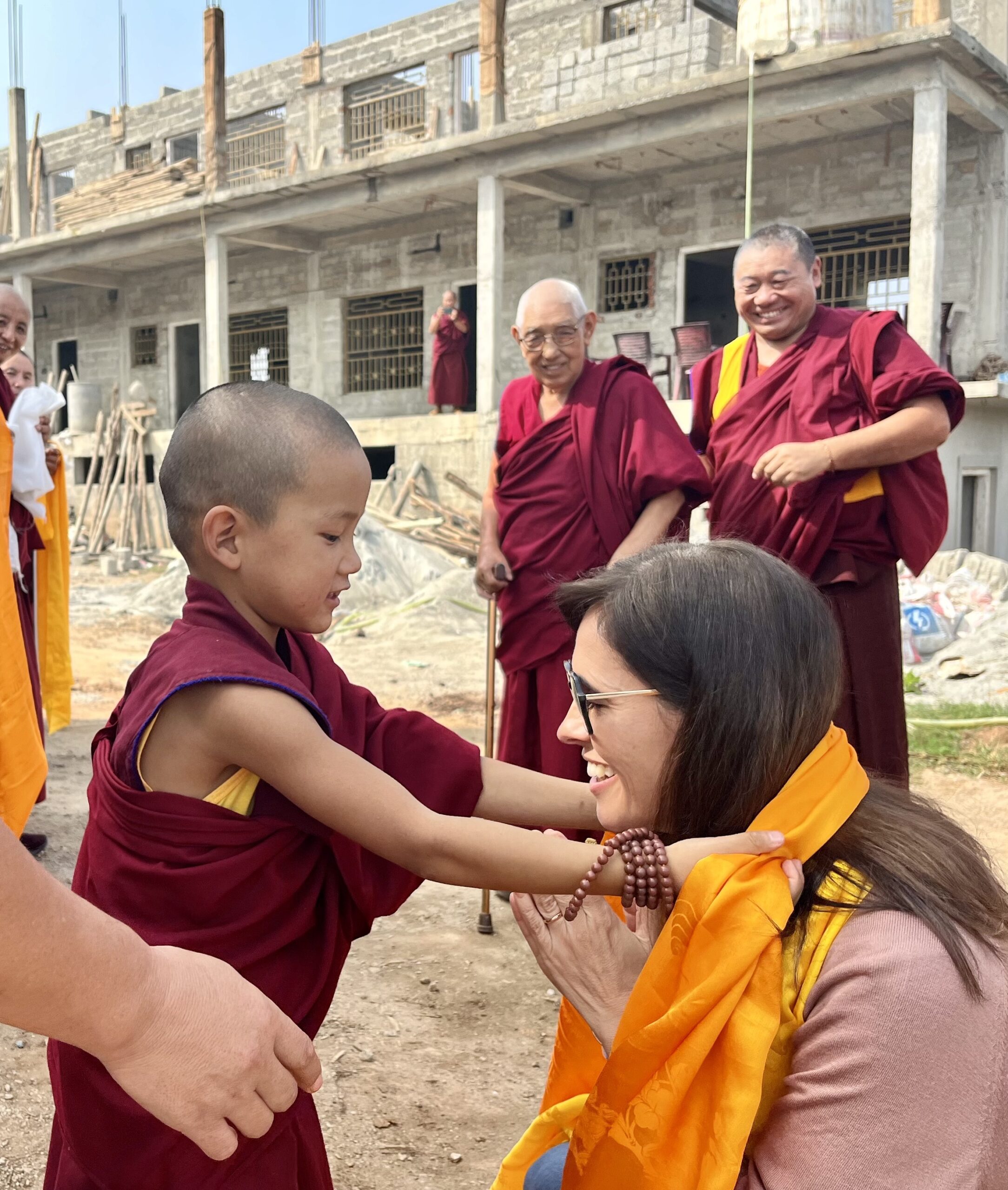
In particular, we work to protect the Tibetan and Buddhist traditions, collaborating with local communities, institutions and organizations active in the field, beginning in India. At the same time, we promote intercultural dialogue and social inclusion, knowing that lasting peace can only be built through respect for diversity and mutual care.
In our perspective, protecting these cultures means investing in a vision of the world where compassion is not an abstract principle, but the concrete foundation upon which to build more just and inclusive societies.

Our commitment
To put this vision into practice, we support essential services that address the concrete needs of communities that embody the principles of compassion and nonviolence, starting with the Tibetan communities in exile. In particular, we support initiatives in education, healthcare and housing, recognizing these as fundamental pillars of individual and collective well-being.
Additionally, we accompany our local partners on journeys toward autonomy and growth. We do not limit ourselves to providing immediate support, but help the communities and organizations we work with to grow sustainably.
We recognize that those on the ground — vulnerable communities and our operational partners — possess deep and valuable knowledge of their own context. For this reason, we do not impose top-down solutions, but promote co-creation processes based on trust, dialogue and shared learning.