Performance-driven education systems help develop specific skills, but often overlook the inner and relational dimensions of the individual. Is it possible to imagine alternative systems? Yes, and some already exist.
Human beings are complex systems. Each of us is a unique blend of experiences, memories, skills, sensations and emotions. We are not made of separate, independent parts, but of dimensions that continuously influence one another and shape our lives, moment by moment. We notice this, for example, when a sensory stimulus, such as a smell, triggers a memory, or when a strong emotion, like fear, produces a physical response, such as running. In our daily experience, it is impossible to separate the mind from the body, or the rational sphere from the emotional one.
To manage this complexity efficiently, we tend to rely on mental shortcuts, on simplifications. In other words, we do not analyze every detail of every situation each time – it would be paralyzing – but we choose, as individuals and as groups, what to pay attention to depending on the context. So on one hand, human experience is rich and complex, shaped by many interconnected and constantly evolving dimensions. On the other, to live sustainably within this complexity, we inevitably simplify reality to some extent, giving more weight to certain aspects over others depending on the situation.
Education systems are one of the main ways in which, as a society, we translate this complexity into simpler and shareable models. In school, for example, we divide knowledge into subjects, organize it into curricula, and assess it through grades and tests: necessary tools, but ones that inevitably simplify the complexity of human experience. In this context, a key question emerges: how can education support personal growth without reducing its complexity?
Educating for performance
To explore this question, we can start by looking at some key traits of modern Western culture. It tends to give strong emphasis to what is visible and measurable, while placing less attention on other, less tangible aspects of reality. Consider how deeply we study physical illnesses in order to treat them, while often struggling to give the same level of attention to mental suffering. Observable phenomena are generally seen as more reliable, while inner experience is harder to recognize and value. Emotions, the quality of relationships and the ethical dimension of our choices are explored less than physical health or the logical and analytical skills needed to process data.
This imbalance is reflected in our education systems, which tend to prioritize what can be measured and leave inner and relational dimensions at the margins. Many school systems are built around a continuous sequence of grades and tests that accompany people from childhood through early adulthood. This model often extends beyond school and is replicated in other fields, such as sports and the arts. There is a strong focus on measuring results, evaluating performance, and fostering development through competition. This approach has clear strengths, especially in supporting the development of specific skills and making learning and comparison scalable. At the same time, it carries a real risk: reducing a person’s value to the results they produce, with significant consequences for their wellbeing.
To some extent, it is normal for education systems to highlight certain aspects over others, because education always involves making choices: which abilities to cultivate, which tools to provide and which goals to consider important. The point is not to eliminate these choices, but to recognize their limits. Making informed choices requires a clear awareness of the direct and indirect consequences of different pedagogical approaches.

Data from the World Health Organization shows that the mental health of younger generations is now a central issue. A significant proportion of adolescents live with conditions such as anxiety and depression, and in recent years these trends have been increasing, even in contexts with high levels of material wellbeing. In traditional Western education systems, emotional and relational dimensions are rarely addressed explicitly. Yet a growing body of research shows that the ability to recognize and manage one’s emotions, as well as to build healthy relationships, is essential for psychological wellbeing. When these dimensions are not included in education, people still encounter them in life, but without the tools to navigate them. In this context, academic pressure and highly performance-oriented environments can further intensify distress. Settings where recognition depends mainly on results and comparison with others tend to increase stress, insecurity and fear of failure.
Within these dynamics, educational environments play a central role because they shape what we value as a community. They are the places where children receive fundamental signals about what is right and wrong, and on this basis they begin to build their adult identities. In this sense, school and pedagogical systems can either amplify distress or provide the resources for healthy growth.
The Dalai Lama’s secular ethics
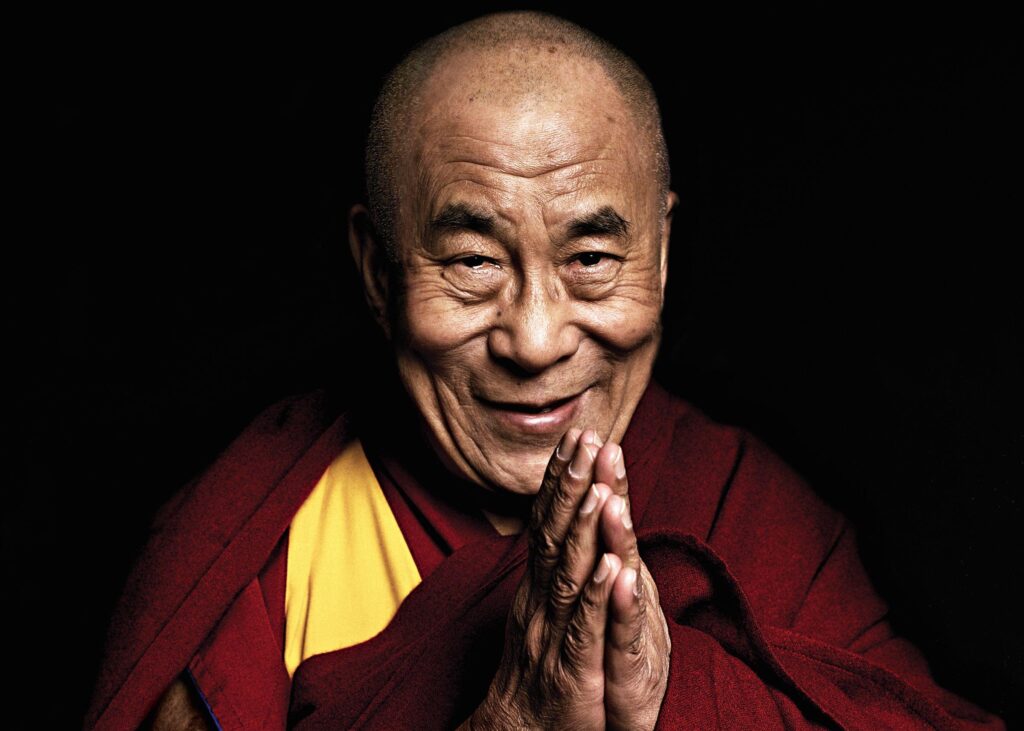
In light of the limits of current education systems, it becomes important to look at models that take a different approach to human development. In this sense, Tibetan Buddhist culture offers a distinct perspective on education. For millennia, Buddhism has reflected on how to reduce human suffering through practices that engage both mind and body. It is within this context that H. H. the 14th Dalai Lama developed the concept of secular ethics. While maintaining his role as a spiritual leader, he has emphasized a key point: some qualities that are fundamental to human wellbeing do not belong to any single cultural or religious tradition, but are part of the human experience itself. From this comes the idea of a secular, or universal, ethics: a set of principles and practices designed to cultivate inner qualities that support wellbeing and reduce suffering, regardless of religious belief. It is not a system that replaces religious teachings, but rather one that can accompany them, making the study and practice of behaviours that reduce individual and collective suffering accessible to everyone.
The idea behind it is simple and powerful. According to Buddhism, many of the challenges we face do not arise only from external conditions, but from our inner mental states. While it is true that we sometimes suffer because of physical pain, many other times we suffer because of psychological and emotional wounds. Most people have experienced distress due to a broken relationship, the difficulty of managing their emotions or the feeling of not being aligned with their own values. These are just a few examples of real and often deep, yet invisible, forms of suffering. For this reason, secular ethics encourages us to work on our inner dynamics and to develop qualities such as awareness, empathy and a sense of responsibility.
But what does secular ethics look like in practice? It is not just a theory, but a practical path that helps train the mind and behaviour, so people can live more balanced lives and build healthier relationships. For the Dalai Lama, this path should begin with education, understood not only as the transmission of knowledge, but as the development of the whole person in all their complexity. A central part of this approach is the study of the mind and emotions, to better understand their dynamics. From this perspective, learning is not only about what we know, but also about how we apply that knowledge, how we think, act and relate to others. It includes, for example, learning to manage anger, developing attention, and cultivating attitudes such as kindness and patience.
The secular ethics proposed by the Dalai Lama therefore suggests integrating these aspects into education, alongside cognitive and physical development, to include emotional, ethical and relational growth. It is an approach that aims to foster a more complete understanding of ourselves, one that is not limited to what is immediately visible. The study of our inner dimensions is not seen as an optional addition, but as an essential element for understanding ourselves and living well.
From vision to practice
We have outlined the limits of an approach centered on performance and measurement, and introduced the perspective of the Dalai Lama’s secular ethics. To return to our initial question, it is helpful to look at how these principles, and more broadly an education that pays attention to the inner dimension, have been translated into real practices. Today, there are programs, institutions and research paths that aim to give more space to the inner, relational and ethical dimensions of human experience. These are concrete efforts to build a more complete form of education, one that does not reduce people to their performance, but supports their overall development.
In recent decades, attention to the inner and relational dimension has also grown through the dialogue between the Dalai Lama and the scientific community. Since the 1990s, meetings and collaborations with researchers and scholars, promoted through initiatives such as the Mind & Life Institute, have helped connect the Buddhist contemplative tradition with neuroscience. This exchange has played an important role in the development and spread of concepts such as emotional intelligence – which we explored in a previous article – and has opened the way to new educational approaches that are more attentive to the inner dimension.
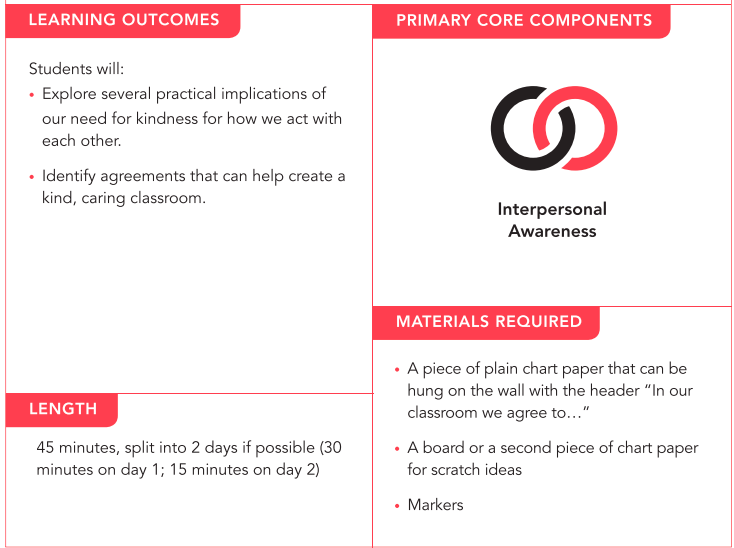
In the school context, one of the most significant developments is SEE Learning (Social, Emotional and Ethical Learning), a program developed by Emory University in the United States on the basis of its dialogue with the Dalai Lama. It is a non-religious educational framework that integrates social development, emotional growth and ethical reflection, bringing the principles of secular ethics into the classroom in a practical way. Its aim is to provide tools to better understand how the mind works, and in doing so, to foster awareness and healthy relationships. In this sense, SEE Learning represents an effort to complement cognitive development with inner, relational and ethical growth.
This approach, inspired by the perspective of secular ethics, can also be found in other educational contexts that share the idea of a more complete form of human development. The Tibetan Children’s Village (TCV) is an example of an educational experience that applies these principles on a large scale. Established at the initiative of the Dalai Lama, this social and educational network seeks to offer children not only a comprehensive education, but also an environment where they can develop autonomy, a sense of responsibility and the ability to live in community. In this context, learning extends beyond the classroom: caring for shared spaces, collaboration and active participation in daily life all become part of the educational journey. In line with Tibetan culture, the inner growth of students is given great importance, and several SEE Learning curriculum initiatives are currently being implemented across the TCV network.
The Dalai Lama Institute for Higher Education is also part of this educational network. Based in Bangalore, India, it can be seen as a higher education institution within the TCV system. Its model combines high-level academic study with a path of personal and community development. Education here is understood in a holistic sense: alongside intellectual growth, equal importance is given to emotional, social and practical dimensions.
Taken together, these experiences show that it is possible to design educational pathways that integrate skills, relationships and the inner dimension, offering a concrete response to the challenge of educating without reducing the complexity of the human being.
Beyond traditional models
Returning to our initial question, supporting personal growth without reducing its complexity is not simple. Education systems inevitably require making choices, and every choice comes with its own limits.
What is becoming increasingly clear, however, is that some fundamental aspects of human experience – emotions, relationships and our ethical sense – have long remained at the margins of the most widespread educational pathways, with negative consequences that we are only now beginning to recognize more explicitly.
In this context, it is important to look at alternative models, not so much to replace one system with another, but to broaden our perspective. Experiences such as SEE Learning show that it is possible to bring Western scientific knowledge into dialogue with practices of awareness and attention to the inner dimension developed in other cultures, such as the Tibetan one. More than offering a definitive solution, these examples point to a direction: an education that does not turn away from the complexity of the human being, but gradually seeks to understand it and support it more fully.

Written and edited by Marta Turchetta
Photos by Pexels, Unsplash and Emory University SEE Learning
References
-
World Health Organization. Mental health of adolescents.
-
World Health Organization. Child and youth mental health in the WHO European Region: status and actions to strengthen the quality of care.
-
Steare, T., Gutiérrez Muñoz, C., Sullivan, A., & Lewis, G. (2023). The association between academic pressure and adolescent mental health problems: A systematic review. Journal of Affective Disorders, 339, 302–317.
-
Liu, W., Wen, H., Zhu, C., Quan, X., Wang, X., & Zhang, C. (2024). The joint impact of trait competitiveness and competitive climate on depressive symptoms and anxiety among adolescents. Journal of Youth and Adolescence, 53, 79–88.
-
Durlak, J. A., Weissberg, R. P., Dymnicki, A. B., Taylor, R. D., & Schellinger, K. B. (2011). The impact of enhancing students’ social and emotional learning: A meta-analysis of school-based universal interventions. Review of Educational Research, 82(1), 405–432.
-
OECD (2021). Beyond Academic Learning: First Results from the Survey of Social and Emotional Skills.
-
World Health Organization. Life Skills Education for Children and Adolescents in Schools.
-
Kuperminc, G. P., Leadbeater, B. J., & Blatt, S. J. (2001). School social climate and individual differences in vulnerability to psychopathology among middle school students. Journal of School Psychology, 39(2), 141–159.
-
Laetsch, A. (2017). Do perceived helpfulness and competition in classroom contexts moderate or mediate the association between perceived stress and socio-emotional strengths and difficulties? Learning and Individual Differences, 58, 31–40.
-
Emory University. SEE Learning (Social, Emotional and Ethical Learning).
-
The Dalai Lama Trust. SEE Learning Global Launch Transcription.
-
Dalai Lama Institute for Higher Education. Secular Ethics.